Voyager & Why
Photographers Live Longer
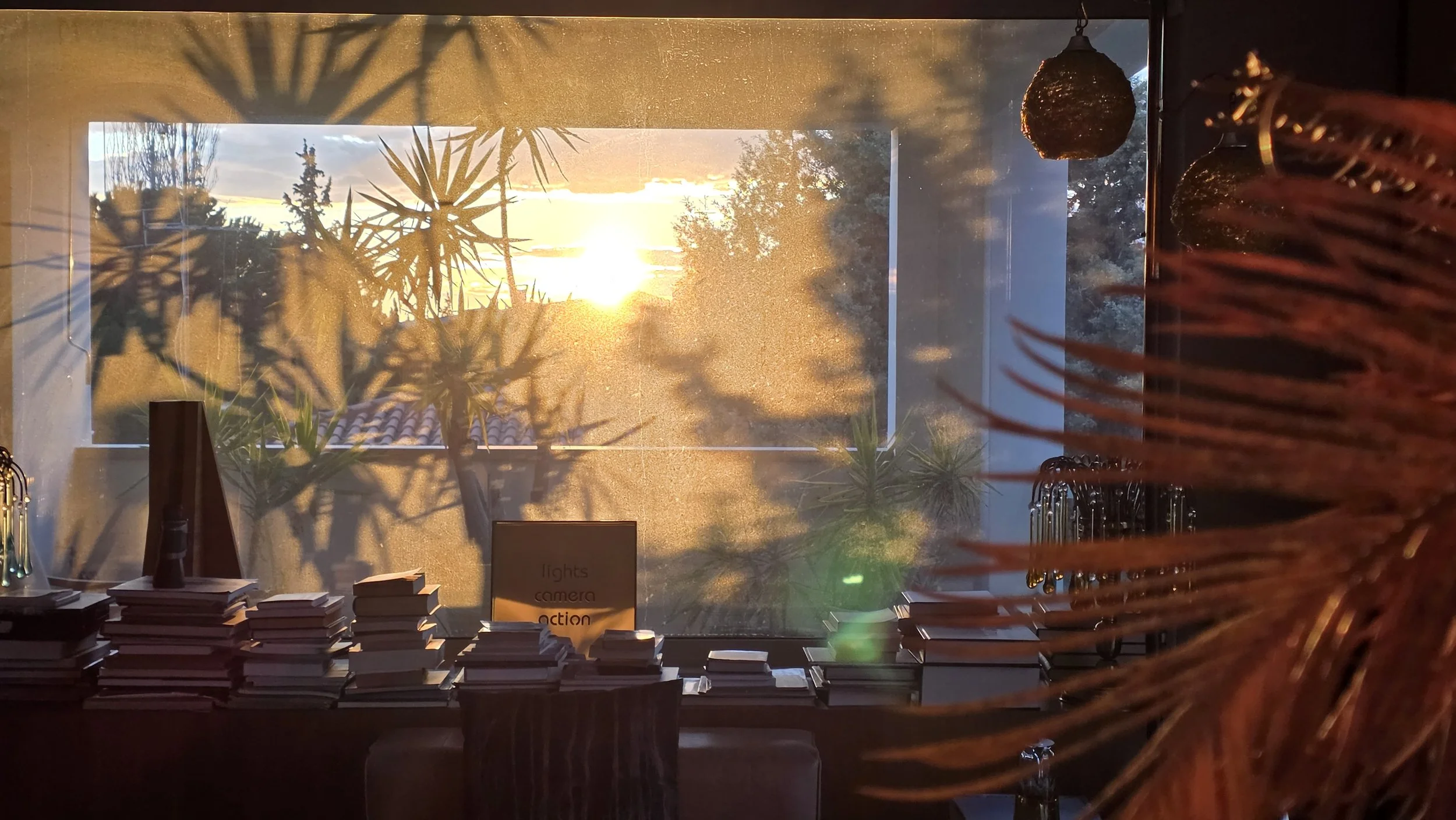
In 1983, an English band called Dream Sequence released a song called "Outside Looking In." It is a strangely perfect way to describe how humanity relates to the universe, we are technically inside it, of course, but it has always made us feel like outsiders pressing our faces against something we can sense but never fully enter.
Only six years earlier, in 1977, humanity decided to stop just looking at the stars from the outside and start "photographing" them looking in. Hence, the Voyager project was created. Launched by NASA, it was essentially a probe powered by nuclear isotopes intended to investigate the universe while carrying a golden disc in its luggage.
This golden disc was the brainchild of Carl Sagan, the most prominent astrophysicist of the time and it included everything an alien would want to know about our species: the human form, sounds of Earth (thunder, birds, heartbeats), greetings in 55 languages, and 115 images to explain the location of Earth. The golden disc wouldn't be complete without music from Earth, and Carl Sagan curated which songs would be sent to outer space for eternity, all while falling in love over the phone with his wife-to-be, Ann Druyan (who worked closely with him on the project). One interesting footnote: Carl Sagan liked the music of Eric Clapton, who released "Wonderful Tonight" in 1977, but he was a huge fan of The Beatles and wanted to include the song "Here Comes the Sun." However, in a very laughable decision, EMI blocked it due to copyright issues, as if the aliens Voyager might encounter wouldn’t pay royalties to EMI!
While Voyager was being prepped for its multibillion-mile journey, life on Earth in 1977 was undergoing its own massive cultural and political shifts. In May 1977, George Lucas changed cinema forever. While NASA was launching a real spacecraft to the outer planets, audiences were seeing a "galaxy far, far away" for the first time. It is a striking parallel: humanity was dreaming of interstellar travel on the big screen at the exact moment we were committing to it in reality. On August 16, 1977, less than three weeks before Voyager launched, Elvis Presley passed away at Graceland. The world lost its most iconic rock-and-roll figure just as a gold-plated record containing the "Sounds of Earth" (including Chuck Berry, but notably no Elvis) was being bolted onto a spacecraft destined to outlast the Earth itself.
At the 49th Academy Awards in March 1977, the underdog story of the decade, Rocky, took home the Oscar for Best Picture. It beat out classics like Taxi Driver and All the President’s Men in a "rocky" ceremony. Other notable events of 1977 were the launch of the Apple II and Commodore computers, as well as the Atari console, the inauguration of Jimmy Carter, and finally, the BankAmerica Credit card being renamed to Visa. In 1990, at the request of Carl Sagan, Voyager turned its camera back toward Earth one last time. It captured our planet as a tiny, flickering speck of dust in a sunbeam, reminding humanity of our smallness and the need to "preserve and cherish" our only home. This photograph, called The Pale Blue Dot, became the most celebrated photograph of all time.
Voyager used what science and technology had to offer in 1977, which is insignificant compared to today’s achievements. To put it in perspective, in 1977 there was no internet, no browsers, no World Wide Web, no GPS systems, no personal computers, no digital photography, no mobile telephony, and no flash memory. For example, the memory it carries is only 68 kilobytes, a tiny fraction of a modern smartphone and yet it navigates through the stars. I use the present tense because, believe it or not, Voyager is still traveling. In November this year, 2026, it will reach the landmark distance from Earth of one light-day (approximately 26 billion km), making it the only human-made object to travel into interstellar space.
To put this in perspective: if you boarded a 747 airplane and headed toward Voyager at top speed, it would take you 2,900 years to reach it. By comparison, the moon is only 1.3 light-seconds away. The second light-day will be completed in 2075. By 2030, the nuclear batteries will die. The cameras are already off. During its second light-day, Voyager will see nothing and say nothing. By the time it finishes its second light-year, everyone who built it will be gone. The incomprehensible part of the story is that, as there is no friction in space, Voyager will continue to travel until every human being is extinct and Earth is consumed by the exploding Sun millions of years from now. And yet, Voyager will still be traveling in the vastness of space as a testament to human ingenuity and curiosity.
In case you wonder why we stopped looking outwards since 1977, something I wonder myself, the answer is multilayered. One important reason is the absence of global power competition, mainly between the US and Russia (and China lately). Exploration is often driven by war or profit. Exploring the universe couldn’t offer a quick ROI once the Cold War was over. At the same time, it was a huge expense during a period when we, as a species, started looking inward at our own infrastructure issues and economic impediments like stagflation. Additionally, the alignment of the planets in 1977 was a rare event that happens only once every 176 years, allowing for a "slingshot" trajectory like Voyager’s. Finally, many skeptics argued it is not a good idea to pinpoint Earth’s position in the universe, in case malicious or hostile aliens ever found our address.
How does Voyager connect to the claim that photographers live longer?
Pierre Soulages, the French painter who lived to 102, once said that painting allows us to live in a more interesting way than we live our everyday lives. He also said his secret to longevity was simple: he kept thinking about the painting he would do tomorrow. I believe the same is true of photographers, perhaps even more so, because a photographer doesn't just create, he also preserves.
Voyager carried 115 photographs of Earth into interstellar space. Carl Sagan understood that an image isn't just a record, it's a way of going back. Every time you look at a photograph you took, you don't just remember the moment. You feel it again. The light, the mood, the person standing there. It hits you differently than memory alone ever could.
This is the quiet trick of photography. You live through an experience once with the camera in your hand, and then again every time the image finds you, on your phone, in an old album. Ordinary people take photos too, but a photographer looks differently from the start. They notice things most people walk past. So even the first pass through the experience is richer. The photograph then keeps giving that back.
Soulages built an entire philosophy around black paint and what lies beyond it, what he called beyond black. He was looking for the light hidden inside darkness. A photograph does something similar. It freezes a moment that is already gone, and somehow keeps finding light inside it every time you return.
Voyager will keep traveling after its batteries die, after everyone who built it is gone, after Earth itself is consumed by the sun. Those 115 images sealed on that golden disc will outlast all of us. On a much smaller but no less real scale, that is what every photographer does with every frame they take. They stretch a single life across many returns. And that, I think, is why photographers live longer.
In November 2026 this year, we should celebrate an unbelievable event: A man- made object will complete one light day away from Earth, making it the longest travelling camera humans ever built.