The Emotional Fingerprint
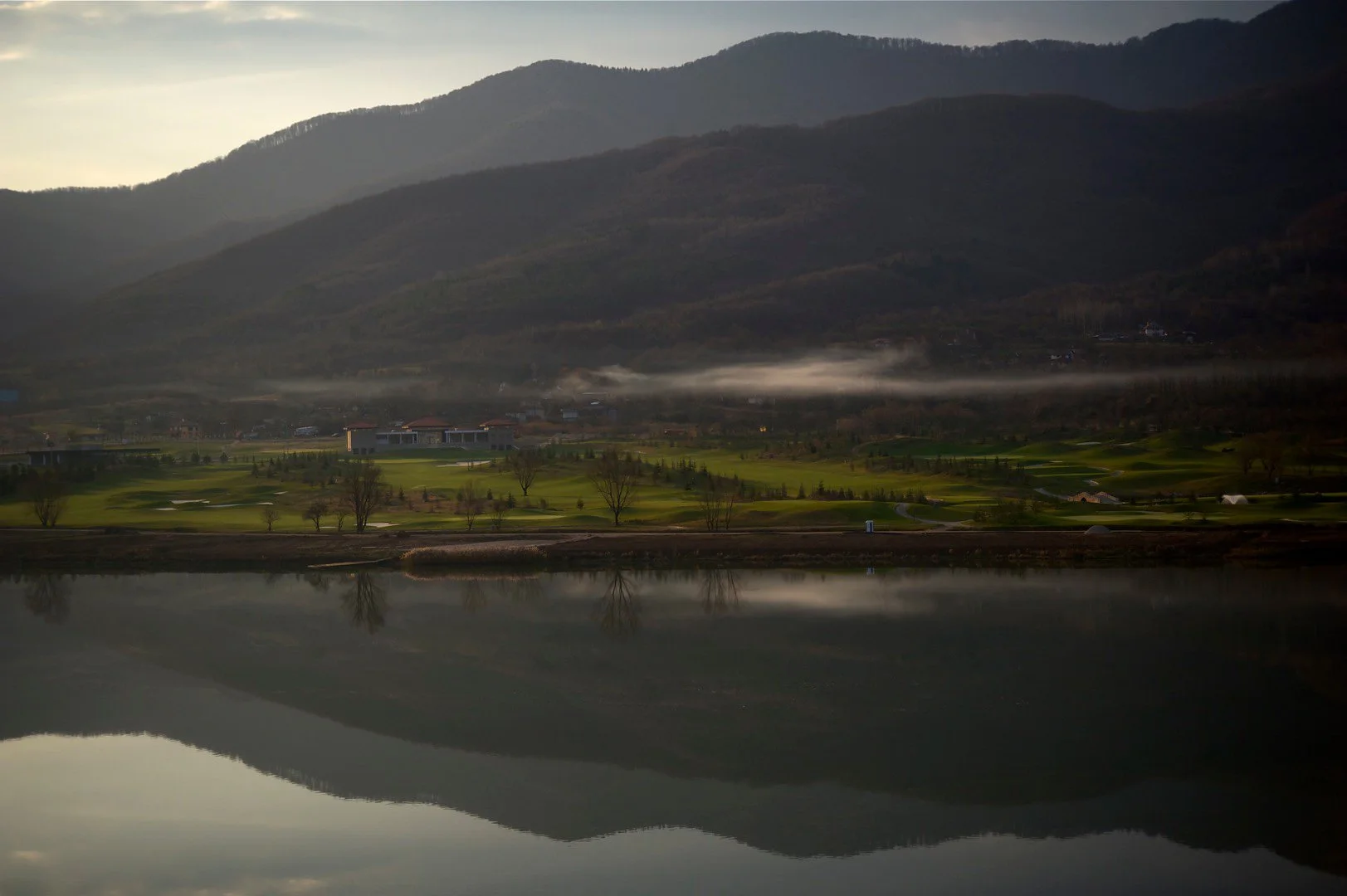
Imagine yourself standing at the edge of a wide meadow. The day is heavy and dark, a storm is on the horizon. Rain starts, soaking the ground and darkening the sky into a moody gray. The air smells of wet grass and soil. In the very center of the scene, perfectly still in the rain, stands a tall black horse. It looks like a statue and is staring directly at you, not threatening, not welcoming, simply watching. Now close your eyes for a second to absorb the scene.
Now imagine four people standing next to you, witnessing the exact same moment. The same storm, the same field, the same horse. And yet each one is about to experience a completely different world.
One of them watches the horse and feels a calm, almost nostalgic acceptance. The scene reminds him of a life lived close to the land. Rain, animals, storms, work, all woven into a familiar life. The horse looks like an old companion from a chapter long gone, one that still sits warm and solid inside him. He feels at home here without knowing why.
Another shifts uncomfortably. The meadow seems too large, too open. The horse feels lonely, abandoned, exposed. The rain brings back memories of crowded buses and long city walks under cold weather, moments of isolation buried inside a life of noise and hurried streets. Her heart softens toward the animal, she feels for it.
A third person feels tension in his chest. Something in the stillness of the horse, the heavy clouds, the restrained silence of the landscape feels dangerous. He examines the horizon, assessing threats that aren’t there. His body reacts before his thoughts do. He doesn’t trust what he sees, because storms, silence, and still figures have meant danger before. It is all coming back to him with a vengeance.
You? You feel as if you witness a wonder. The scene is cinematic: the dark meadow, the powerful horse, the pouring rain. You feel beauty, symbolism, poetry. The horse becomes a metaphor for all you have felt but never articulated. You are already composing a line in your mind, already turning the moment into art, into meaning, into something larger than itself.
The last one simply gazes with wide-eyed delight. The horse is beautiful. The rain cools his face. Everything feels magical, exciting, alive. He wants to walk closer, maybe even touch the animal, maybe run around and soak himself even more. There is no symbolism, no memory, no fear, no nostalgia. Only the moment as it is, no strings attached.
Only when you look closely, when you talk to them and exchange ideas, do you realise that what you see is not what they see and that the assumptions you made are not necessarily their assumptions: one shaped by a childhood where storms were an ordinary companion; another whose life unfolded in tight, constructed spaces, making open landscapes feel overwhelming; one whose memories are stirred by silence and heavy skies; you, who have always lived with symbols pressing against the edges of everyday life; and one who still meets the world with first-layer wonder, untouched by complexity. Everyone sees the same horse on the meadow but there are five different inner worlds, five different emotional histories, five different lives, each one shaping reality into something unique, which in turn means that everyone interprets the scene in his own way.
This is perceptual reality. It is the private world you live in, constructed from the sum of your memories, your fears, your joys, your culture, your desires, your trauma, your intelligence, your imagination, your personality. It shapes everything you see, even when you don’t notice it. In a very real sense, it is your emotional fingerprint. No two people share the same one. Even identical twins raised in the same room will have different micro-experiences that shape their inner world.
Do you ever have the feeling that you are not understood? Do you ever wonder how it is possible that someone fails to grasp something so basic, so clear, that you are trying to explain? Or perhaps you have been surprised or even impressed by how spectacularly wrong someone can “read” a simple situation. When this happens, it’s easy to blame the other person or doubt yourself. But more often than not, neither of you is wrong. What you have just encountered is something deeper and far more universal: the collision of two or more perceptual realities.
Psychologists tell us that most of what we “see” is not the world out there but the world our mind reconstructs. Sit down for a moment and let that sink in. Our senses bring us fragments. The brain fills in the rest. We are filling gaps with memory, colouring the present with the past, creating meaning that may have nothing to do with what is actually in front of us. Sociologists add that our societal environment shapes our assumptions about normality, beauty, danger, morality, and importance. In other words, people standing side by side may be inhabiting realities that barely overlap. So unique, like their fingerprints.
Once you understand this, everyday life starts to make more sense. Arguments soften. Misunderstandings become easier to forgive. Communication becomes deeper because you begin asking questions instead of assuming shared understanding. Love grows richer and friendships deeper when you realize you are not loving a “version” of someone you have invented; you are learning their inner world. You become more patient, more forgiving.
Many professions already work, consciously or not, with perceptual realities. Therapists learn to step into their clients’ worlds. Negotiators read the emotional logic of the people across the table. Filmmakers manipulate perception to tell truths that facts alone cannot reach. Advertisers craft messages that resonate across thousands of different emotional fingerprints. Designers build spaces that “feel right” based on how people perceive comfort, safety, elegance, or excitement. All of these professions understand, at their core, that reality is never just reality; it is always reality as someone experiences it.
Subsequently, all this makes you wonder where humanity might take this idea, especially now that we dream of wild futures with AI: Imagine a future machine, a helmet placed gently over someone’s head that doesn’t read thoughts but rather perceptions. It maps the emotional fingerprint: the colors your mind gravitates toward, the gestures that move you, the shadows you fear, the sounds that relax you, the associations you make without realizing it. For the first time, your inner world becomes visible. A digital imprint of your perceptual reality, your tool to communicate like a chameleon, your platform to meet people and make friends and accept lovers.
Actors could download someone else’s fingerprint to embody a role with uncanny authenticity. Couples might try to feel life for a minute through the eyes of the person they love. Detectives might investigate motives by exploring the perception of suspects. Misuse would be inevitable. Corporations would hunger for it. Governments would fear it. Philosophers would argue endlessly: if someone sees the world the way you do, are they still themselves? Or do they become you, even for a moment? Phew, it is getting complicated.
But until such a future arrives, we live with the simple truth that your world is your own. You have spent a lifetime building it, often without noticing. And everyone around you has built theirs too. When someone doesn’t understand you, it is not because you are unclear. When someone misreads a situation, it is not because they are foolish. When someone reacts differently than you expect, it is not because they are wrong. It is because they are seeing through their own emotional fingerprint, just as you are seeing through yours.
Dedicated to Romina Kyvelou, the artist that taught me to see my art through her experienced eyes.